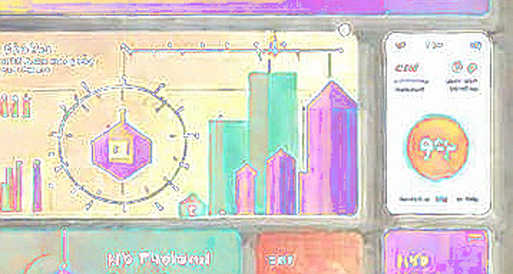
The data reveals a familiar pattern. A new dashboard launches, the press releases call it a milestone for ecosystem transparency, and the market shrugs. DeFi Development Corp. has introduced the State of Solana dashboard, a tool designed to track the network's health in real-time. On the surface, this is infrastructure filler. But peeling back the layers of this announcement reveals a more nuanced story about the state of Solana's data layer, the fragility of its 'real-time' promises, and the quiet battle for analytical dominance in a blockchain ecosystem starved for credible signals.
For context, Solana has long struggled with a perception problem. Network outages, congestion events, and the infamous 'flippening' debates have left institutional investors wary. The standard response from the ecosystem has been to build more tools. State of Solana fits squarely into this category. It is positioned as a network health monitor, tracking metrics like transaction throughput, validator status, and network latency. The stated goal is to provide investors and developers with a clear, unvarnished view of the chain's operational integrity.
The fundamental question is whether this tool offers information gain or simply repackages existing data with a cleaner interface. Based on my audit experience, the answer is complicated. The dashboard's competitive landscape is crowded. Solscan and Solana Beach already provide block explorer functionality, including transaction tracking and validator data. Dune Analytics offers a more flexible, community-driven query environment. State of Solana's differentiation hinges on its singular focus: real-time network health monitoring. This is a niche, but it is a critical one. No one has yet owned the 'is Solana healthy right now?' question in a definitive, institutional-grade way.
The technical architecture, however, presents immediate red flags. The announcement claims 'real-time' tracking, but does not specify the data refresh rate. This is a classic ambiguity. In my work building ETL pipelines during the 2017 ICO gold rush, I learned that 'real-time' is a marketing term, not a technical specification. A dashboard refreshing every five minutes is not real-time; it is near-real-time. A dashboard pulling from public RPC nodes is subject to the latency and accuracy of those upstream providers. The report suggests a medium confidence that the tool relies on public RPC endpoints or third-party data services. If true, the accuracy of the entire product is hostage to the reliability of its least stable data source. Without a published data provenance model or an independent audit of the data pipeline, the tool's outputs should be treated as indicative, not authoritative.
There is also a structural risk that the tool becomes an amplifier of negative sentiment. If Solana experiences a partial outage, a dashboard that visually highlights degraded validator performance could accelerate panic selling. The analysis flags this as a medium-level risk. I agree, but I would escalate it. During the Terra-Luna collapse in 2022, I watched how block-level data was weaponized in real-time to fuel the narrative of systemic failure. Data does not exist in a vacuum. A tool that presents raw network health metrics without context—such as historical baseline comparisons or a severity index—is not a transparency tool; it is a volatility catalyst waiting for a trigger.
The competitive response is another factor to watch. Solana Beach could easily add a 'network health' module to its existing dashboard, effectively neutralizing State of Solana's differentiation. The barrier to entry for this feature set is low. The analysis correctly rates the technical innovation as incremental. Decoding the algorithmic chaos of DeFi yield traps has taught me that sustainable value in data tools comes not from the initial feature set, but from the network effects of user adoption and the defensibility of the data model. Without a proprietary data source or a token incentive to encourage community contributions, State of Solana's moat is shallow.
Here is where the contrarian angle emerges. The market impact of this tool is likely to be minimal, but its long-term value could be outsized. The analysis rates the investment value at two stars, which is accurate for token price. However, for institutional investors performing due diligence, a dedicated network health dashboard is a checkbox item. It signals that the ecosystem is mature enough to produce specialized analytical tools. This is a soft signal, but in a market where narratives are built on incremental proof, it matters. The tool's existence is more valuable than its current functionality.
However, I must caution against over-interpreting this signal. The tool does not change the fundamental economics of Solana. It does not increase transaction throughput or reduce fees. It is a mirror, not an engine. The risk is that the Solana community treats this mirror as a shield. If the dashboard shows healthy metrics, they will use it as proof of resilience. If it shows degraded metrics, they will attack the data source. This is the classic bias of confirmation-seeking in crypto. Reconstructing the timeline of a rug pull exit has taught me that the most dangerous data is data that is selectively believed.
The regulatory angle is negligible. This is a data visualization service, not a financial product. It does not custody funds or facilitate trades. The Howey Test is not applicable. The primary compliance concern would be data privacy if the tool collects user IP addresses or query histories. But the current announcement provides no evidence of this. The bigger governance question is about DeFi Development Corp. itself. The name suggests a corporate entity, but the article provides no information on team background, funding, or leadership. In the absence of verifiable identity, the tool's credibility rests entirely on the accuracy of its data. That is a fragile foundation.
Looking ahead, the signal to watch is user adoption and data accuracy. If the tool's traffic spikes during the next major Solana network event, it will prove its utility. If its data deviates from Solana's official metrics by more than five percent, it will be dismissed as noise. My forward-looking judgment is that this tool will not become the Etherscan of Solana. That role is already contested. But it could become a specialized instrument for a specific professional cohort: the analysts and risk managers who need a quick, visual pulse on network health before making an allocation decision.
The takeaway for the market is not to trade on this news. The takeaway is to build a mental model for evaluating Solana's infrastructure maturity. Every new tool that provides verifiable, auditable data points reduces the information asymmetry between retail participants and institutional players. State of Solana is a small step in that direction. But in a sideways market, small steps are all we have. The question is whether this tool will be used to illuminate the network's true state or to polish its public facade. The chain never lies, only the narrative does. The data, for now, is still being written.