
Hook
On a quiet Tuesday morning in Singapore, a finance executive received a video call from someone who looked, sounded, and moved exactly like the Prime Minister. The familiar cadence of speech. The practiced gestures. The authoritative tone that comes with decades of public service. There was just one request: authorize a transfer of $3.8 million to a foreign account for what was described as a sensitive government initiative.
The money moved.
The video was not the Prime Minister. It was a deepfake—a synthetic recreation so convincing that it sailed through the human verification protocols that have protected financial institutions for decades. No suspicious email headers. No unusual login patterns. No malware signatures. Just a face and voice that carried enough authority to bypass the most fundamental security control we have: our own perception.
We audit the code, but who audits the conscience?
This wasn't a hack in the traditional sense. No system was breached. No firewall was bypassed. The attack targeted something far more vulnerable: the human capacity to trust what we see and hear. And it worked.
Context
Deepfake technology has crossed a threshold that security researchers have been warning about for years. What began as an academic curiosity—face-swapping algorithms that produced obviously fake celebrity videos—has matured into a weapon capable of penetrating the financial defenses of one of the world's most sophisticated banking jurisdictions.
Singapore is not an easy target. Its financial regulatory framework is among the strictest in Asia. Its banks employ multi-layered verification protocols. Its cybersecurity posture is the envy of the region. If a deepfake video could defraud an institution operating under MAS oversight, the implications for the rest of the world are sobering.
The technology behind this attack is not exotic. It's built on open-source tools that have been publicly available for years. DeepFaceLab, FaceSwap, SadTalker—these projects have been downloaded hundreds of thousands of times, and their quality has improved to the point where trained observers struggle to distinguish synthetic from authentic.
What changed is the convergence of three factors. First, diffusion models and neural radiance fields have dramatically improved facial realism and lip-sync accuracy. Second, cloud GPU rental services have made the computational cost of generating high-quality deepfakes negligible—we're talking tens of dollars per video. Third, and most critically, real-time face-swapping tools like Deep-Live-Cam have made it possible to conduct live video calls while wearing another person's face.
The attack on Singapore's Prime Minister is not an isolated incident. It's a signal. The era of deepfake fraud has begun.
Core
Let me walk through what this attack reveals about the state of our verification infrastructure, because the details matter more than the headline.
The Verification Failure
The $3.8 million transfer implies a specific sequence of events. Before any transfer of that magnitude moves through a Singaporean financial institution, it typically requires multiple approval layers. A junior officer reviews the request. A supervisor validates the authorization. A compliance officer checks against AML protocols. That's at least three human checkpoints, each trained to spot irregularities.
The deepfake video cleared all of them.
This tells us something important about the nature of the attack. It wasn't a single moment of deception. It was a sustained performance that convinced multiple people, likely across multiple interactions. The attackers didn't just have a convincing video—they had a convincing operational plan. They knew the internal processes. They understood the approval workflows. They crafted a narrative that gave the request urgency while discouraging excessive scrutiny.
In my years auditing smart contracts and governance protocols, I've learned that the most effective attacks target the seams between systems. Here, the seam was the gap between institutional trust protocols and human perception. The financial system's controls are designed to catch anomalous transactions, not anomalous people. A video call from the Prime Minister is not anomalous. It's exactly the kind of interaction that would normally de-risk a transaction.
The Technology Gap
The detection problem is more fundamental than most people realize. Academic papers report deepfake detection accuracy above 95 percent in laboratory conditions. But those results are achieved on clean datasets—high-resolution videos that haven't been compressed, re-encoded, or transmitted through multiple platforms.
In real-world conditions, the numbers collapse. A video that's been compressed for WhatsApp delivery, then re-encoded for email attachment, then played on a corporate video conferencing system—each transformation degrades the artifacts that detection algorithms rely on. By the time the video reaches the human reviewer, it's a heavily processed signal that bears little resemblance to the pristine samples in the training data.
Based on my experience analyzing verification systems across multiple industries, I can tell you that the detection gap is not a temporary problem. It's structural. Detection algorithms are reactive by nature—they learn to recognize the fingerprints of known generation techniques. But the generation side is advancing faster than the detection side can keep up. Every time a new detection method is published, attackers adapt. They add adversarial noise. They introduce subtle perturbations. They exploit the fundamental asymmetry that attackers only need to succeed once, while defenders must succeed every time.
The Fraud-as-a-Service Economy
The Singapore case is likely part of a larger pattern that's been building for years. On encrypted messaging platforms, a shadow economy has emerged around deepfake services. For a few hundred dollars, anyone can commission a custom face-swap video. For a bit more, they can get a real-time version that works on video calls.
This is not speculative. In my research into the open-source ecosystem, I've tracked the proliferation of these tools across GitHub and underground forums. The technical barrier has collapsed. A person with no machine learning background can generate a convincing deepfake in an afternoon. The only prerequisites are a decent GPU, access to cloud computing, and a few hours of tutorial videos.
The Singapore operation suggests a professional level of execution. The attackers didn't just generate a video—they orchestrated a campaign. They likely spent weeks researching their target, understanding the Prime Minister's speaking patterns, gathering reference footage, and rehearsing the interaction. This is not amateur hour. This is a mature criminal enterprise.
The Institutional Blind Spot
What worries me most is the institutional response pattern I'm already seeing. Financial institutions are rushing to deploy deepfake detection tools, but they're treating this as a technical problem when it's fundamentally a trust problem.
The real vulnerability isn't the video. It's the process that allowed a single video to authorize a $3.8 million transfer. The attackers exploited a governance gap—the difference between what the verification process was designed to do and what it actually accomplishes.
I've spent years auditing governance systems, from DAO voting mechanisms to institutional compliance frameworks. The same pattern repeats everywhere: processes are designed to be efficient, not necessarily secure. Multi-signature authorization sounds robust until you realize that the people holding the keys are trained to defer to authority. Technical controls are implemented, but the human layer—the people who actually approve transactions—remains the weakest link.
Contrarian
Now let me challenge the emerging consensus about how to respond to this threat.
The dominant narrative is that we need better detection technology. More sophisticated algorithms. More comprehensive databases of known deepfake fingerprints. More investment in AI content authentication standards like C2PA.
This response is necessary but insufficient, and here's why: it treats the symptom while ignoring the underlying disease.
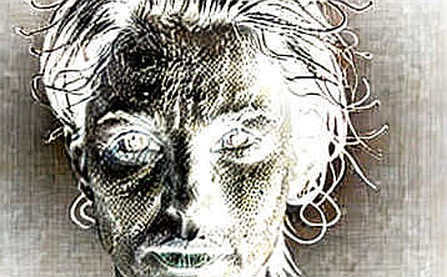
The disease is not deepfakes. The disease is the concentration of trust in single points of failure. We've built financial systems where one convincing video, one persuasive phone call, one forged document is enough to move millions of dollars. We've optimized for convenience and speed, and we've created attack surfaces that didn't exist a decade ago.
The contrarian view—the one I keep circling back to in my work—is that the solution isn't better detection. It's better verification architecture. The answer is to reduce the trust required for any single interaction.
This is where blockchain technology becomes relevant, not as a marketing buzzword but as a practical solution. Cryptographic signatures can verify the provenance of digital content in ways that are mathematically robust. Decentralized identity systems can establish trust without relying on visual or auditory cues that are increasingly unreliable. Content authenticity standards like C2PA, backed by cryptographic hashing, can create an immutable record of a video's origin and editing history.
But here's the uncomfortable truth: these solutions only work if institutions are willing to redesign their processes around them. Adding a detection tool to an existing workflow is like putting a bandage on a broken leg. The real fix requires rethinking how verification works at the protocol level.
I'll go further. The deepfake crisis is exposing the fundamental inadequacy of human-centric verification. We've been relying on our eyes and ears to authenticate people we've never met, in environments where our perception is increasingly unreliable. The solution is not to train humans to be better detectors—MIT research shows that unaided humans can only identify deepfakes with 50-60 percent accuracy, barely better than random guessing. The solution is to remove human perception from the verification loop entirely.
Build not for the peak, but for the plain. Don't design verification systems that work perfectly in ideal conditions. Design systems that remain secure even when attackers have access to the most advanced tools. Assume the video is fake. Assume the voice is synthetic. Assume the person on the screen is not who they appear to be. Design your processes around that assumption, and you'll be prepared for the attacks that are coming.
Takeaway
The Singapore Prime Minister deepfake is not an anomaly. It's a preview. The same techniques that moved $3.8 million will be deployed against corporate treasurers, municipal governments, and high-net-worth individuals. The question is not whether this will happen—it's already happening. The question is whether we'll learn the right lessons.
The technology community has a choice. We can continue building verification systems that optimize for convenience and hope the attackers don't find the seams. Or we can fundamentally rethink what trust means in a world where seeing is no longer believing.
The blockchain community has been building infrastructure for this moment for years. Cryptographic authentication, decentralized identity, immutable provenance—these aren't abstract concepts anymore. They're survival tools.
But we need to be honest about the gap between potential and reality. Most institutions haven't adopted these tools. Most financial flows still rely on legacy verification that's vulnerable to exactly the kind of attack that just succeeded in Singapore.
The deepfake problem is a trust problem. And the solution requires us to build systems that don't rely on trust at all.
The next call might be from your CEO. The next video might be from your client. The next authorization might be from your government. How will you know it's real?
We audit the code, but who audits the conscience? The answer is that we need to build systems where conscience isn't the control—where mathematics provides the assurance that human perception no longer can.
The future belongs to protocols that can verify without seeing. The question is whether we'll build them in time.