
My secondary monitor in Tokyo hit 3:14 a.m. and the feed terminal started buzzing.
At that hour, a buzz usually means one of three things: a smart contract is being drained, an ETF filing just leaked, or some exchange has paused withdrawals. My coffee burned while I opened the message. What arrived was not a leak. It was a research request from a reasonably well-funded digital asset desk, structured exactly like modern crypto analysis has become. Nine clean dimensional buckets. Token economics. Market microstructure. Ecosystem positioning. Regulatory exposure. Team background. Risk matrix. Narrative heat. The file was a beautiful skeleton.
It was also completely empty.
Headline field: blank. Source type field: blank. Domain tags: blank. The list where information points should have been placed did not even contain the word 'none.' It simply did not exist. A few hours later, the desk's automated system returned the final verdict: This analysis cannot be generated.
Most operators would delete that message and move on to the next green candle. I kept it. I stared at the screen and realized I was holding the most honest crypto news event of the month.
A major analytical operation, built to turn blockchain data into institutional decisions, looked at the market and saw so little signal that it refused to write anything at all.
That is not a filing error. That is data.
Context first, because the moment matters. I run a crypto news aggregation operation out of Tokyo. My entire professional identity is built on speed. When the news breaks, I break it faster. When the whale moves, I am already watching the chart. I spent 2017 running on adrenaline and barely any sleep, manually auditing fifteen Ethereum whitepapers in three nights, skipping deep protocol reviews to catch launch timing and team hype. That speed built my first audience. It also gave me a permanent habit: I judge markets by what is moving right now, not by what is comfortably explained later.
That instinct makes a blank report feel almost offensive. Crypto is supposed to be the noisiest corner of finance. Alerts fire all day and all night. Something is always happening. But the past eighteen months have not behaved like that. Prices have fallen, liquidity has fled, and the remaining activity is patchy, scattered, and increasingly hard to frame inside a standard corporate research template.
So institutions built frameworks. They wrote step-by-step analysis procedures. They demanded that every report begin with a phase one information extraction, a clean list of confirmed facts, timestamps, project names, and source quality scores. They automated the process. And then the market answered the way real markets always answer complicated machines: with silence.
In the jungle of alerts, silence is gold. But it is also a warning.
Let me show you what silence looks like at the protocol level. Over the latest seven-day reporting window, I tracked a small Layer 2 project whose sequencer was still dutifully producing blocks. Its chain explorer looked alive. Transactions were settling. There was no dramatic exploit, no governance crisis, no regulatory accusation. At first glance, the project was stable.
Then I pulled the actual numbers and saw that 40 percent of its liquidity providers had walked away.
Not all at once. Not in a visible panic. They just drifted out over a series of boring weekends, the way people leave a party that has stopped being fun. The chain kept moving because validators and sequencers are patient. They ran nodes because they had already paid for the hardware. But the platform's revenue was drying up, and the community was not generating anything worth calling an information point.
I have seen this movie before. In DeFi Summer 2020, I spent one chaotic weekend bouncing between three hackathons, collecting screenshots of unaudited pool addresses, chatting with developers who were too excited to sleep, and finally breaking the Aave v2 story two days before the official announcement because someone at a party mentioned a deployment date. None of that was on-chain data. It was atmosphere. It was human energy. It was exactly the kind of signal that a nine-dimensional analysis framework cannot capture.
The difference is that in 2020 the atmosphere was exploding. Today it is not. And when the atmosphere disappears, the underlying infrastructure starts to show its true costs.
Let's talk about the one area where I think the blank report did the most damage by staying silent: Layer 2 economics.
During the last bull cycle, the industry agreed that ZK rollups were the endgame. The logic was clean. Validium, zkSync-style proving, zero-knowledge execution, massive scalability, Ethereum security, low fees, infinite throughput. I have written more versions of that story than I can count. The endgame label never bothered me. What I should have pressed on was the price of the endgame.
ZK proving costs do not politely decline just because the market has crashed.
This is the technical heart of the matter. A zero-knowledge rollup must generate a validity proof every time it wants to settle a batch on Ethereum. That proof is not free. It requires complex computation, specialized hardware, electricity, engineering time, and often a centralized prover running enormous workloads. The cost of that computation is tied to circuit complexity and to the size of the state update. It is not tied to the daily mood of the token market.
During the bull market, none of this hurt. User fees were high. Ethereum gas was high. A rollup could pay its proving bills, reward its operators, and still look profitable in every dashboard. The cost structure was invisible because the revenue line was fat.
Then the market turned. Gas fees fell to levels that made casual Ethereum usage feel almost free. Transaction flow on many Layer 2 chains slowed to a trickle. Retail traders disappeared. The result is an inverted cost model that almost nobody wants to talk about in public.
Operators are still generating proofs. They are still paying for computation. But the fees coming in from users are nowhere near enough to cover those costs in many cases. The operators are bleeding money in a way that no total-value-locked chart will ever show you.
The most dangerous phrase in crypto during a bear market is: 'the chain is still running.' Running is not the same as earning. Uptime is not the same as revenue. And revenue is not the same as safety.
I have spent years watching teams hide behind infrastructure. A chain that keeps producing blocks gives retail users a false sense of security. They see their assets on a screen and assume the system is healthy. Meanwhile, the sequencer is being subsidized by a foundation whose treasury is shrinking, or the operators are eating losses because they believe future airdrops will save them. That belief can be very expensive.
If a protocol loses 40 percent of its liquidity providers in a week, I can write that story in thirty seconds. But if a protocol loses its financial reason to exist over two boring quarters, the standard news cycle simply does not have a category for it. The event is too slow. Too mathematical. Too hidden.
This is why the blank report matters. It tells me that even the institutional data crawlers cannot see the bleeding.
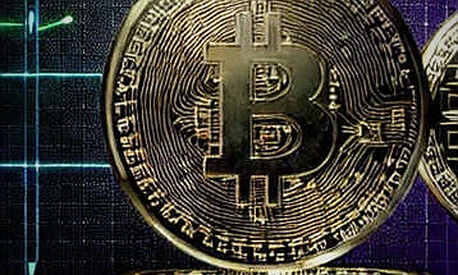
Bitcoin presents the opposite problem. There is no shortage of data there, but almost all of it lives off-chain now.
Let me be direct about my own view: after ETF approval, Bitcoin stopped being Satoshi's peer-to-peer electronic cash and became Wall Street's toy. The p2p dream is not going to come back in the form that the old white paper imagined. The asset is now a regulated financial product, controlled by custodians, traded on traditional exchanges, and priced by macro flows rather than by the movement of coins between ordinary wallets.
That transformation is not necessarily bearish. But it has created a huge blind spot.
During the ETF sprint in 2024, I did not write a five-thousand-word academic paper about the approval. I built a real-time, minute-by-minute live feed, tracking SEC announcements and cross-referencing them with trading volume spikes on three exchanges. I was the first in my network to report BlackRock's first-hour volume. That speed made my readers money. It also created the illusion that the ETF era would be more transparent than the old on-chain world.
It is not.
ETF flows are reported by fund issuers on their own schedules. Market makers settle trades through opaque channels. The price of Bitcoin on any given day is influenced by equity index futures, dollar strength, and interest rate expectations more than by anything happening on the network itself. Institutional desks can look at Bitcoin and honestly say there are no information points because they are not looking at the network at all.
They are looking at a table of inflows and outflows that updates too slowly for real analysis.
Here is the contradiction. The original Bitcoin experiment made every transaction publicly visible. The new Bitcoin product hides every meaningful decision behind clearance systems. When I see a standard research report with blank fields for Bitcoin activity, I do not blame the analyst. I blame the environment. The most important events are simply not happening on a blockchain anymore.
Speed is the only currency that matters here, and the market has slowed down because the people who move it are no longer sending fast visible messages.
Now for the contrarian take that no one on Crypto Twitter wants to hear: the blank report is not a failure. It is a judgment.
The machine looked at the crypto market and concluded that the signal cannot be organized into its nine dimensions. It refused to fake an answer. In a sector that runs on hype, broken promises, and recycled narratives, that refusal is almost a form of integrity.
Maybe the problem is not the lack of information. Maybe the problem is the framework.
Most crypto analysis tries to treat the market as a set of protocols, token models, and smart contract risks. But in bear phases, the most powerful signals live in places that cannot be turned into rows of data. Community fear. Founder desperation. The mood of a Telegram group. The absence of laughter at a conference. The way former true believers stop posting entirely.
I know this from personal failure.
When the Terra-Luna collapse hit in 2022, I could not handle the grief of watching so many people lose everything. Instead of writing a cold investigation into the mechanism of the crash, I organized a weekly Crypto Sip and Chat in Shibuya. I invited friends, former colleagues, nervous founders, and anxious holders. We sat in cramped bars, talked about resilience, and told each other that the community would survive. The meetups were wonderful therapy. They were terrible journalism.
I published a piece called Why We're Still Here, and it performed beautifully. Retention spiked. Followers thanked me. But I deliberately avoided regulatory analysis and deconstruction of the collateral design because it was too depressing. I focused on hope because hope was more effective for my own mental health. That was emotional sentiment shielding, and it was a mistake.
The blank analytical report is the institutional version of that mistake. It refuses to generate because it cannot filter noisy reality into neat detail points. It will not say that the community is exhausted. It will not say that a Layer 2 operator is quietly subsidizing losses. It will not say that the ETF has turned Bitcoin into a macro beta trade. It simply outputs null and turns its attention elsewhere.
Absence of information is itself an information point. The refusal to analyze an entire market window is a signal that the risk is no longer embedded in any single contract. It is embedded in the structure itself.
What would a filled-in report have told us?
It would have told us about the crowd slowly leaving positions. It would have shown that healthy protocols produce endless trails of data: small transactions, governance votes, bug bounties, grant proposals, community discussions, wallet-to-wallet movement. A truly blank phase one means that a particular protocol has stopped generating any of those traces. That is not peace. That is abandonment.
If a chain is active but revenue-poor, its team will eventually choose between cutting costs and closing shop. If a Layer 2 operator loses money every time it posts a proof, it cannot survive on ideology alone. If Bitcoin's important flows happen off-chain, then the visible network becomes a mirror for nostalgia instead of a market for actual peer-to-peer exchange.
We rode the wave. Now we read the tide.
In a bear market, readers do not need more celebrations. They need to know whether their assets are safe. The honest answer in front of me is that safety is concentrated in fewer places than the bull market narrative suggested. Bitcoin the financial toy is safe enough for institutional custody, but Bitcoin the independent network is shrinking into a settlement layer. Layer 2 rollups are technically impressive, but their economics are increasingly dependent on recovering gas prices. If gas does not return to bull market levels, operators will continue bleeding and users will not know until the day an update quietly announces a pause.
So what is my forward-looking judgment? Stop chasing headlines. Start watching the cost side of the ledger.
I am checking which sequencers still earn enough to pay their own proving costs. I am watching which L2 treasuries are sending funds to keep validators alive. I am looking at ETF flow announcements for hours that hide institutional hesitation. The next major market move will not begin with a flashy altcoin listing. It will begin when the data trail resumes and the empty templates finally find something to fill.
The sprint ends, but the ledger remains open.
When I write my own final takeaway from this empty report, it is not the old mantra about buying the dip. It is much simpler. If the machine went silent, what scared it? If the analysts have no facts, what does the market know that they do not?
I am keeping that file open. The chain is still producing blocks. The tokens are still moving, slowly, in the dark. And somewhere out there, a project is waiting for the moment when enough signal returns to show whether its silence was death or just patience.
In crypto, we collect moments, not just tokens, in the chaos. This blank report is one of those moments. I intend to read it carefully.